Headshots
Headshot Poses: 9 That Work, and the Reason Each One Does
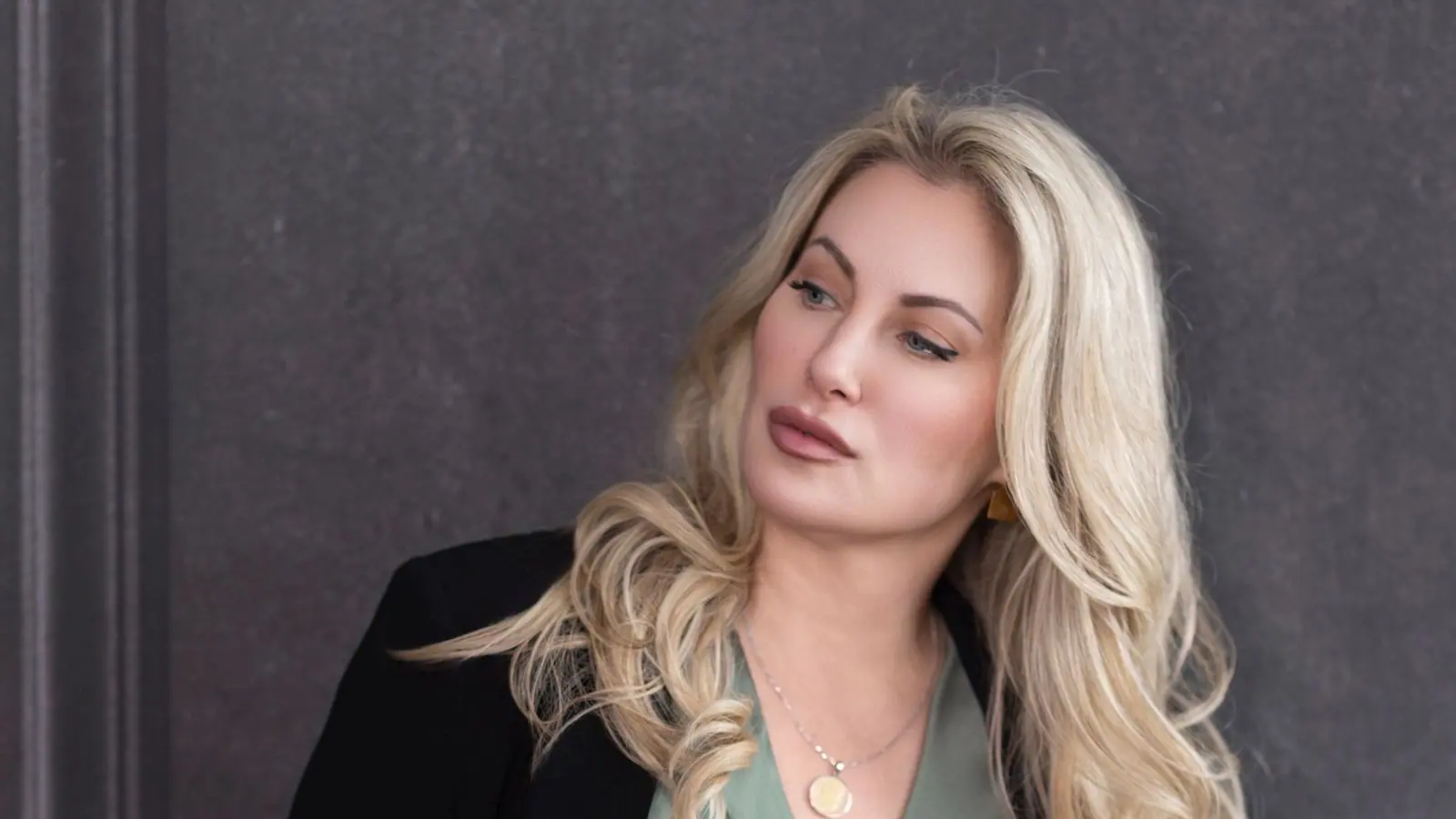
Most headshot poses that work are small variations on one base pose. Turn your shoulders 30 to 45 degrees away from the camera, put your weight on your back foot, push your chin forward and then down a touch, and let your eyes do most of the smiling. Everything below builds on those four moves.
If you look stiff and awkward in every photo ever taken of you, I want to say this plainly. It is not your face.
Stiffness is what a body does when it stands square to a lens, holds its breath, and has nobody telling it what to do next. All of that has a mechanical fix, so I have put the reason under each pose.
Why you look stiff in photos
Nerves do predictable things. The shoulders creep toward the ears, the chin pulls back into the neck, and the weight settles evenly on both feet, so you stand square and still. The smile goes on early and stays on until the eyes stop joining in.
None of that is a personality trait. It is posture, and posture can be directed.
It matters because faces get read fast. Princeton psychologists found that judgments of trustworthiness and competence made after seeing a face for a tenth of a second lined up closely with judgments made with no time limit. That sounds like bad news. I see it the other way, because a read that fast comes from what shows at a glance, like your shoulders and your eyes, and those change with one sentence of direction.
If your worry is bigger than posing, I wrote separately about looking good in photos in general.
How to pose for a headshot: the base pose, step by step
Build it from the floor up.
- Turn your body 30 to 45 degrees away from the camera. Square to the lens, your shoulders make one flat line and the photo reads like an ID card. Turned, they make a diagonal, and diagonals look alive.
- Put your weight on your back foot. Your front knee softens and your hips stop being level. Most of what reads as stiff is really symmetry, and this breaks it.
- Breathe out and let your shoulders drop, the front one a fraction lower than the back.
- Bring your face most of the way back to the camera while your body stays turned. That small difference is what makes it a portrait.
- Push your chin forward, then down a touch. Forward first, as if showing the camera your forehead, which separates the line of your jaw from your neck. It feels ridiculous and the camera cannot tell. Then lower the chin only slightly, because University of British Columbia researchers found that tilting the head down about 10 degrees makes a neutral face look more dominant, by making the eyebrows appear lowered and V-shaped. Forward does the work. Down is the finishing touch.
- Exhale just before the frame. A held breath shows in the neck and around the mouth.
All of this feels strange from the inside. What looks natural in a photo usually feels a little odd.
9 professional headshot poses and why they work
Most of these are the base pose with one change, starting with tight crops and widening to the ones where your arms show.
1. The three-quarter turn
The base pose, cropped at the chest. The turn gives your face shape, one cheek nearer the camera than the other, with a jawline that reads clearly against the neck. If you only take one pose home, take this one.
2. Square to the camera, softened
Head-on reads as direct and open, which suits work where the photo's job is to make a stranger comfortable picking up the phone. Done stiffly, it is a passport photo. Keep your weight on one foot, drop one shoulder a fraction, and add a few degrees of head tilt. Square and slightly uneven looks like a person.
3. The lean-in
Hinge forward from the hips an inch or two. Your face ends up closer to the lens than your shoulders, so it fills more of the frame, and the lean reads as attention, like listening across a table. Lean from the hips, not the neck, or your head arrives before your body does.
4. Seated on the front of the chair
Sitting is a gift to nervous people. Your legs stop holding you up and your shoulders come down on their own. Sit on the front third of the seat, back long, body turned. Leaning back into the chair tips your face away and lets the lens look up under your chin.
5. Forearms on a table
Still seated, lean in and rest your forearms on a table or on your knees. Your hands finally have somewhere to be, and your arms form a triangle that points up to your face. Rest one hand loosely on the other. Fingers laced tight look like a job interview.
Those five keep your arms mostly out of the picture. The next four do not, which is where the panic about hands usually starts.
6. Arms crossed, loosely
Crossed arms read as confident or guarded, and the difference is the grip. Pulled tight with the hands hidden, they look defensive. Crossed loosely, fingers resting visibly on the opposite arm, they look settled. Pair it with a real smile and save it for wider crops like a website bio, because in a tight LinkedIn crop it shrinks to a strip of sleeve.
7. One hand in a pocket
An arm hanging straight down presses flat against your side and blends into your torso. Slide a hand into a pocket and the elbow bends, a gap opens between arm and body, and the frame has shape again. Fingers in, thumb out, or the hand vanishes.
8. A shoulder against the wall
Lean one shoulder lightly on a wall or doorframe, feet a step away. A body at rest stops looking posed, which makes this a good location choice for an about page. Keep it light. If the wall is holding you up, it shoves that shoulder toward your ear.
9. Looking back over the shoulder
Turn your body close to side-on, then bring your face back over your near shoulder. It has movement and reads editorial, so it suits creatives and speakers. Turn your head too far and the neck tendons stand out, so let your body do most of the turning.
You do not have to memorize any of this. I direct every pose, down to which way your fingers point. You will never be left standing there wondering what to do with your hands. Inquire about a headshot session and we will find out which of these nine are yours.
Your face: the squinch, the smile and where to look
The squinch
Photographers call it the squinch: a small lift of the lower eyelids, far less than a squint. Wide-open eyes read as startled, which is how most people feel at first. A slight lift reads as focused and sure. You do not need to practice it. I will remind you.
A real smile versus a posed one
A real smile reaches the eyes, lifting the cheeks and creasing the outer corners. A posed smile stops at the mouth, and people notice even when they cannot say why. Researchers at Western University in Canada found that people rate smiles with that wrinkling around the eyes as more sincere and more intense than smiles without it.
That is why I rarely say "smile." Asking for one gets the mouth. Asking a question gets the eyes, and the best frame is often the half second after a laugh.
Where to look
Into the lens, so the photo meets the eyes of whoever reads your bio. Looking just past the camera works for a speaker or editorial frame, but your main headshot should look straight out.
Headshot poses that fail, and why
Every one of these fails because of angle. None of them is about how you look.
- Square shoulders, arms hanging straight. A flat block that reads like an ID photo.
- Chin pulled back. The one I see most, because a nervous body does it automatically. It folds the skin under the jaw and blurs the jawline into the neck.
- Chin lifted high. The lens looks up your nose, and you appear to look down on the viewer.
- A hand pressed to the face. Pressure pushes the cheek out of shape. A hand near your face should barely touch it.
- The held smile. After a few seconds it stops being a smile and becomes a position. Let it drop and start again.
The best poses for headshots, by where the photo is going
The right pose depends on the photo's job. A 2014 Princeton study found that impressions from different photos of the same person can vary as much as impressions of entirely different people, and that which photo people preferred shifted with its purpose, an online dating profile versus a political campaign. I would say the same holds for LinkedIn versus a speaker page.
- LinkedIn. Shown small and in a circle, so your arms barely register. The three-quarter turn or the lean-in, a real smile, eyes to the lens.
- Website bio. A wider crop, so your arms join the message: loosely crossed arms, a hand in a pocket, or the wall lean. Legal and executive bios often suit a squarer stance and a closed-mouth smile.
- Speaker and conference. More energy, like the over-the-shoulder look or a frame just after a laugh. Leave space around your head, because someone else will crop it.
- Realtor. Approachable beats powerful. The softened square-on pose, or a three-quarter turn with a full smile.
- Team page. Everyone turns the same way at the same crop, so the page reads as a team rather than a collage.
- Acting. A different brief, built for casting. I cover how posing changes for acting headshots on its own.
Do men and women pose differently for headshots?
Less than the internet suggests. Shoulders, chin, weight and eyes work the same way on every face. What genuinely differs is mostly hair and clothes.
Headshot poses for women
Long hair needs a decision. Forward over the near shoulder, it frames the face. Behind both shoulders, it shows the neck and jawline. Try both. A deeper weight shift and more head tilt are traditional in women's portraits, but in a professional headshot I keep both modest, because a big tilt can slide from approachable into coy.
Headshot poses for men
Button a suit jacket when you stand and unbutton it when you sit, otherwise it flaps open standing and bunches up seated. A structured jacket also makes a squarer stance work, because its shoulders hold a clean line. And a beard does not exempt you from the chin rule.
For the clothes themselves, my full headshot wardrobe guide covers color and fit.
If you wear glasses, or you do not like your smile
Glasses
Wear them if you wear them every day, or the photo will not look like you. Glare is light bouncing off the lens, so the fix is angle. Push the frames up so the top rim clears your eyes, then tip the lenses down a fraction by lifting the arms slightly off your ears. I angle the light around most of what is left.
If you do not like your smile
The answer is not to stop smiling. It is to stop being asked to. A study in the Journal of Nonverbal Behavior found that only a substantial minority of people can produce a genuine, eye-crinkling smile on purpose. If every smile you have made on command looked fake to you, that is probably why. It is a common limit, not a flaw in your face.
So I give you other options: a closed-mouth smile with a slight squinch, a frame taken as a smile starts or fades, and mostly just conversation, so whatever shows up on your face is yours. In my experience, the frame people like best is rarely the one they tried hardest in.
Why so many AI headshots strike the same pose
Scroll through a page of AI-generated headshots and the sameness shows up fast: the same three-quarter turn and the same chin tipped toward the same shoulder, face after face. That is my observation, not a study, but I think it is a big reason so many profile photos now look alike.
A generator can hand you a pose. It cannot see that your shoulders crept up again, or that your real smile arrived a second after the one you offered. Posing gets directed live, and that takes someone in the room. If you are weighing the two, I have written about where AI headshots help and where they fall down.
Frequently asked questions
What is the best pose for a professional headshot? The three-quarter turn: shoulders 30 to 45 degrees from the camera, weight on the back foot, face turned most of the way back, chin forward and slightly down. It suits almost every face and almost every use.
What do you do with your hands in a headshot? In a tight headshot, nothing, because they are out of frame. In a wider crop, give them a job: a hand in a pocket, arms loosely crossed with the fingers visible, or forearms resting on a table.
Should you tilt your head in a headshot? A little. A few degrees reads warm, much more reads as a question. Tipping your head down can make a neutral face look stern, so bring the chin forward first and lower it only slightly.
Is it better to sit or stand for a headshot? Both work, so try both. Sitting often helps nervous people because the shoulders relax. Sit on the front third of the chair and lean slightly forward, never back.
Should you smile with teeth in a professional headshot? Either works as long as your eyes join in. A full smile reads warm. A closed-mouth smile with a slight squinch reads calm and confident. Have both to choose from.
How do I not look stiff in a headshot? Put your weight on your back foot, breathe out before each frame, and stop holding the smile. Stiffness mostly comes from standing square and still.
You do not have to know how to pose
Almost everyone who books a headshot arrives saying some version of "I hate having my photo taken." I do not expect you to know a single pose on this page. Knowing them is my job.
A headshot session runs 60 minutes, in my Charlottesville studio or on location, with professional hair and makeup included, and we choose your images together at a same-day reveal. For everything to do before the day, here is how to get ready for your headshot session.
You do not need to feel photogenic before you book. That part is mine. Inquire about a headshot session and we will plan it from there.
Last updated: September 16, 2026
About the author: Arnel Gonce is a portrait photographer in Charlottesville, Virginia. She has photographed over 1,000 sessions since 2015, covering headshots and personal branding, families, seniors, maternity, boudoir and her signature Fabulous Over 50 sessions. She guides every client from first nerves to final gallery so the camera catches them at their most confident.
Arnel Gonce
Portrait Photographer, Charlottesville VA
Arnel Gonce is a portrait photographer in Charlottesville, Virginia. She photographs headshots, families, seniors, maternity, boudoir, and her signature Fabulous Over 50 sessions, guiding every client from first nerves to final gallery so the camera catches them at their most confident.


Reading is nice. Being in front of the camera is better.
Ready to Book Your Session?
Tell me what you have in mind and we will plan a session that feels easy, fun, and completely like you.