Portraits
How to Look Good in Photos, Even If You Hate Them
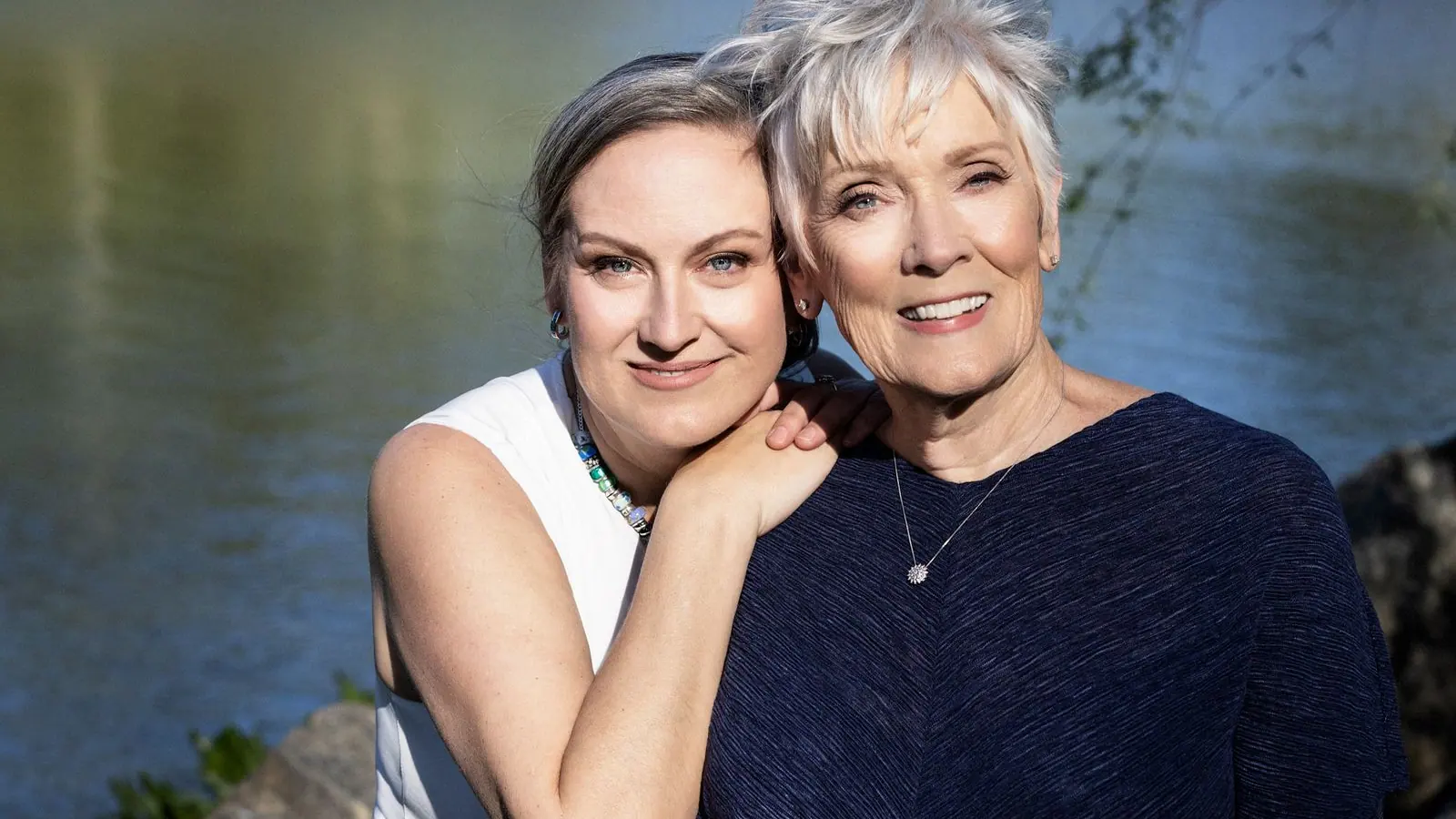
"I am just not photogenic." If that is the sentence you say every time someone pulls out a phone, I promise you it is almost never true. To look good in photos, face soft light, keep the camera five feet away or more and near eye level, angle your body slightly, bring your forehead toward the lens, breathe out, and take far more frames than feels necessary.
Every part of that is mechanical, which is the good news. Mechanical things can be fixed.
Once you understand why you look worse in a photo than in the mirror, a bad picture stops feeling like a verdict on your face. Usually it was just taken too close, in poor light, half a second too early.
Why do I look different in photos than in the mirror?
You have been looking at a flipped version of your own face your whole life.
A mirror reverses you left to right. Nobody's face is perfectly symmetrical, so the eyebrow that sits a little higher and the side your smile pulls toward both land on the opposite side in a photograph. Your brain notices straight away, even if you cannot say what changed.
In a classic 1977 experiment by Mita, Dermer and Knight, people preferred the mirror image of their own faces, while their friends preferred the true, unflipped image. The explanation is familiarity. We like what we have seen most, and you have seen your mirror face far more often than anyone else has.
So the photo that looks "off" to you is very likely the version the people who love you actually prefer.
Sit with that one for a second.
A mirror also lets you move and quietly pick your best angle without thinking about it. A camera freezes one fraction of a second you did not choose, then hands it to you as if it were the whole truth.
Your phone is too close to your face
If most of the photos you hate are selfies, this one is for you.
The closer a camera is to your face, the more it enlarges whatever is nearest the lens, usually your nose, while your ears and the sides of your face fall away. It is not the lens being cruel. It is the distance.
A 2018 study in JAMA Facial Plastic Surgery put a number on it. Selfies taken 12 inches away made the nose look about 30 percent larger, while at five feet, a standard portrait distance, there was essentially no difference. A phone held at arm's length is a lot closer to the first number than the second.
That is not your face. That is geometry.
What to do instead:
- Hand the phone to someone else and ask them to step back, then zoom in. If your phone has a 2x or 3x setting, that is the one to use.
- On your own, prop the phone on a shelf at eye level, step back, and use the timer.
- Keep the lens at your eye level or a touch above. From below, the camera looks up your nose and under your jaw, an angle nobody sees you from in real life unless they are a toddler.
The light is coming from the wrong place
Most of the photos people hate were taken under a ceiling light or the midday sun, and both of those light you from directly overhead.
Overhead light drops shadows into your eye sockets and under your nose and chin. Those shadows read as tiredness, and they make every line on your face look deeper than it is. You did not age ten years between the bathroom mirror and the restaurant photo. The light moved.
The fix is to put the brightest light in front of you, slightly above eye level, and as soft as you can find. A window is perfect. Stand facing it, a few feet back, with whoever is taking the photo standing between you and the glass. Outside, step into open shade at the edge of a building or under a tree, then turn your face toward the open sky.
Soft front light does not erase texture, and it should not. It just stops shadows from exaggerating it. That is the difference between looking like yourself on a good day and looking like yourself after a red-eye flight.
In the studio, shaping that light around the face in front of me is most of my job.
The camera caught you between expressions
A camera cannot tell the difference between your smile and the half second on either side of it.
Half-closed eyes, a mouth caught mid-word, the start of a laugh that looks like a wince. Your face really did all of those things. None of them is what people see when they look at you, because people see faces in motion, not in slices.
Blinks alone ruin more frames than most people realize. In 2006, two CSIRO scientists won an Ig Nobel Prize for working out how many shots a group photo needs before you can be confident nobody is blinking. Their rule of thumb for groups under 20 was to divide the number of people by three in good light, or by two if the light is bad. They cheerfully admitted it was a rough calculation, but the point stands. Blinks are a numbers game, not a flaw in you.
This is why the person who appears in only a handful of photos a year suffers the most. If you are in four pictures from the whole holiday and one caught you mid-blink, that one becomes evidence. In a set of forty, it is just a frame you delete.
So take more. Use burst mode, and ask whoever is holding the camera to keep shooting through the laugh.
How to look good in photos, step by step
This is what I coach in front of the camera. Being photogenic is mostly this list, practiced a few times, with someone telling you when you have got it.
1. Sort out the light and the distance first
Face the brightest soft light you can find, then put the camera five feet or more away at roughly eye level and zoom in. A great pose in bad light from twelve inches away is still a bad photo.
2. Turn your body, then bring your face back
Standing square to the camera makes anyone look like a passport photo. Turn your shoulders a little away from the lens, put your weight on your back foot, then turn your face back toward the camera. It gives the photo depth and relaxes your stance immediately.
3. Bring your forehead toward the camera
This one feels the silliest and works the best. Move your face gently forward, as if your forehead is leading toward the lens, then tip your chin down a fraction. It stops your head sinking back into your shoulders, which is what most of us do the second we feel watched. I go through head angles, hands and shoulders in detail in my guide to headshot poses.
4. Drop your shoulders and breathe out
Tension shows up in a photo before anything else, and it usually lives in the shoulders, which creep up toward the ears. Take a breath, let it all the way out through your mouth, and let the shutter go near the bottom of the exhale. Held breath looks like held breath.
5. Give yourself a real reason to smile
"Say cheese" produces a mouth-only smile, and everyone can tell. A genuine smile reaches the eyes. Psychologists call it the Duchenne smile, where the muscle around the eye squeezes the outer corners into the shape of a crow's foot while the mouth lifts, and most of them treat it as the sign of real enjoyment.
Which means the crow's feet you may have spent years trying to hide are the exact thing that makes your smile look real.
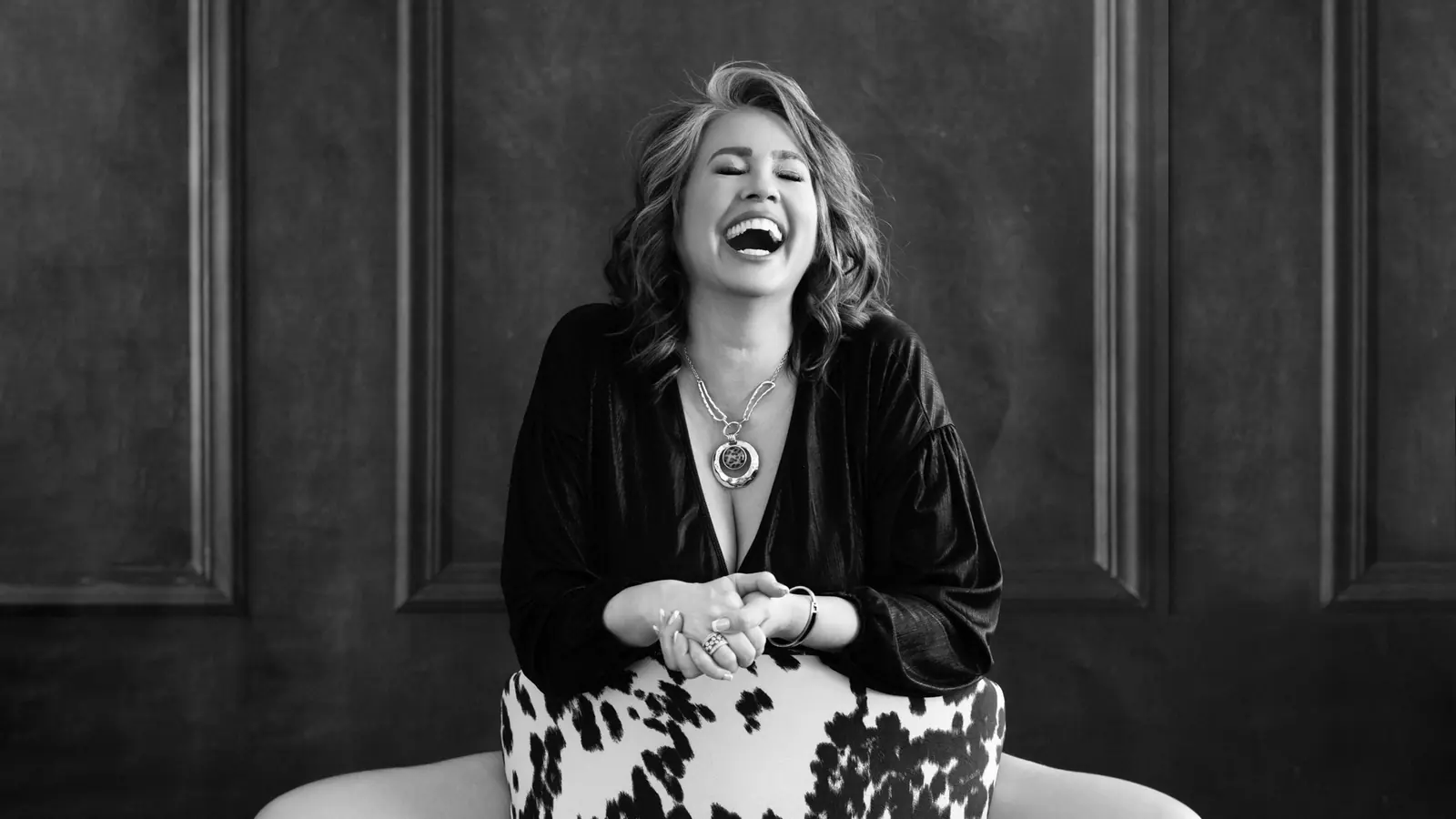
That kind of smile is very hard to produce on command, so stop trying. Think of the person you would most like to be laughing with, or let the photographer make you laugh. A lot of my job is exactly that, and it beats any expression you can hold.
6. Move between frames
Stillness reads as stiff. Shift your weight, look away and back, laugh, reset. The best frame is often the one just after you stopped trying.
7. Let someone direct you
You cannot see yourself while you are being photographed, so you are guessing. Someone behind the camera can see what you cannot. "Chin down a touch. Now breathe out. There." Being told exactly what to do with your hands turns out to be an enormous relief.
Phone photos versus a professional session
Everything above works with a phone. Window light, a timer, burst mode, and a friend willing to make you laugh will get you a photo you like more often than not.
What a professional session adds is the part you cannot do for yourself. Someone moves the light to suit your face rather than the room, and watches your shoulders, chin and breathing so you can stop thinking about any of it. Nobody leaves you standing there wondering what to do with your hands.
If the photo is for work, a headshot session in my Charlottesville studio includes professional hair and makeup, and we plan your wardrobe together beforehand. I show you the images the same day, in person, and you choose the ones you like with me in the room. You are not handed a gallery to sort through alone at midnight.
Inquire about a session if you are tired of avoiding the camera and want to see what changes when someone else handles the light and the direction.
If you are the one always behind the camera
If you are the one who takes the pictures, I would guess your camera roll looks something like this. Hundreds of photos of the kids, the grandkids and the dog, and almost none of you.
The few that do exist were taken by someone in a hurry, under a kitchen light, from below, while you were mid-sentence. Of course you do not like them. That is every mechanical problem in this post, stacked into one frame.
For women over 50, the private version of this usually sounds like "I do not photograph well anymore." I understand why it feels true. It almost always means nobody has photographed you properly in years, with decent light and someone paying attention.
You do not need to change anything about yourself first. Not your weight, not your hair, not your skin. Light and distance do the heavy lifting, and direction does the rest.
That is the whole idea behind my Fabulous Over 50 sessions. I coach every pose and expression, and we look at the images together the same day. If you want the longer version, I have written about why women over 50 are booking portraits for themselves.
A real face beats a perfect one
Scroll through any feed in 2026 and you will see faces smoothed until they look poured from a mold. In my view, filters, retouching apps and AI generators all push the same way, toward no pores, no lines and no one in particular.
After more than a thousand sessions, my honest opinion is that this has made real texture look unusual, and unusual is memorable. A photo that looks like you on a good day beats a photo that looks like nobody. Anyone who meets you after seeing it should recognize you.
I am not against retouching. I am against retouching that erases the laugh lines your laugh put there.
If you are weighing an AI generator for a work profile, I have written up the case for and against AI headshots separately.
Frequently asked questions
Why do I look bad in photos but good in the mirror? Mostly familiarity and distance. The mirror shows you flipped, which is the version of your face you know best, and you adjust your angle without noticing. Photos show you unflipped and frozen, often from too close and in overhead light.
How can I be more photogenic? Treat it as a skill rather than a trait. Face soft light, keep the camera five feet or more away at eye level, turn your body slightly, breathe out before the shutter, and take plenty of frames. Practiced a few times, that is most of what people mean by photogenic.
Why do I hate photos of myself? Partly because a photo shows you the unflipped version of your face, which feels unfamiliar, and partly because you are the only one comparing it against the mirror. Other people see your face moving and talking. You see one frozen frame and go looking for flaws. It gets easier once you have a few photos you actually like.
Is the mirror or the camera more accurate? A photo taken from five feet or more, unflipped, in soft light is the closest to what other people see. The mirror shows you reversed. A close-up selfie is the least accurate of the three, because short distance enlarges whatever is nearest the lens.
What is the most flattering camera angle for photos? The lens at your eye level or slightly above, your body turned a little away, and your face turned back toward the camera. Avoid shooting from below the chin, which is where a lot of group photos end up when the phone is propped on a table.
Can you look good in photos over 50? Yes, and the mechanics do not change with age. Soft front light, a sensible camera distance and someone directing your expression matter far more than anything about your face. And a real smile, the kind that crinkles the eyes, reads even more clearly when there are a few lines there to show it.
The next photo you are in
You do not have to love every picture of yourself. Nobody does.
You only need a few that look like you on a good day, so the people who love you have something real to keep.
So stand in the light. Step back from the phone. Breathe out. And if you would rather have someone handle all of it for you, inquire about a session and tell me what the photos are for. I will take it from there.
Last updated: September 9, 2026
About the author: Arnel Gonce is a portrait photographer in Charlottesville, Virginia. She has photographed over 1,000 sessions since 2015, covering headshots and personal branding, families, seniors, maternity, boudoir and her signature Fabulous Over 50 sessions. She guides every client from first nerves to final gallery so the camera catches them at their most confident.
Arnel Gonce
Portrait Photographer, Charlottesville VA
Arnel Gonce is a portrait photographer in Charlottesville, Virginia. She photographs headshots, families, seniors, maternity, boudoir, and her signature Fabulous Over 50 sessions, guiding every client from first nerves to final gallery so the camera catches them at their most confident.
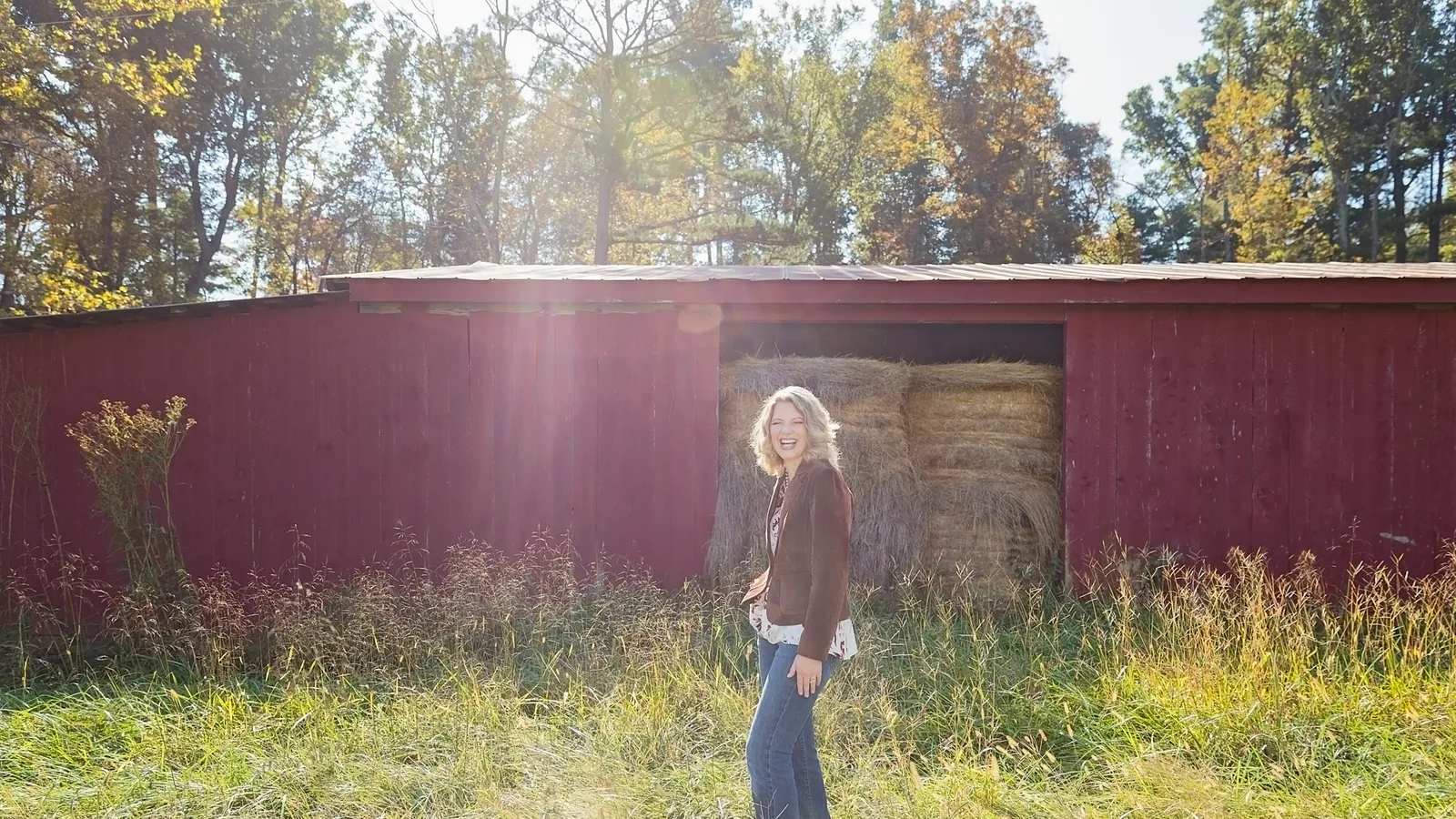

Reading is nice. Being in front of the camera is better.
Ready to Book Your Session?
Tell me what you have in mind and we will plan a session that feels easy, fun, and completely like you.