
Family
Family Photo Poses: Prompts That Beat Standing in a Line
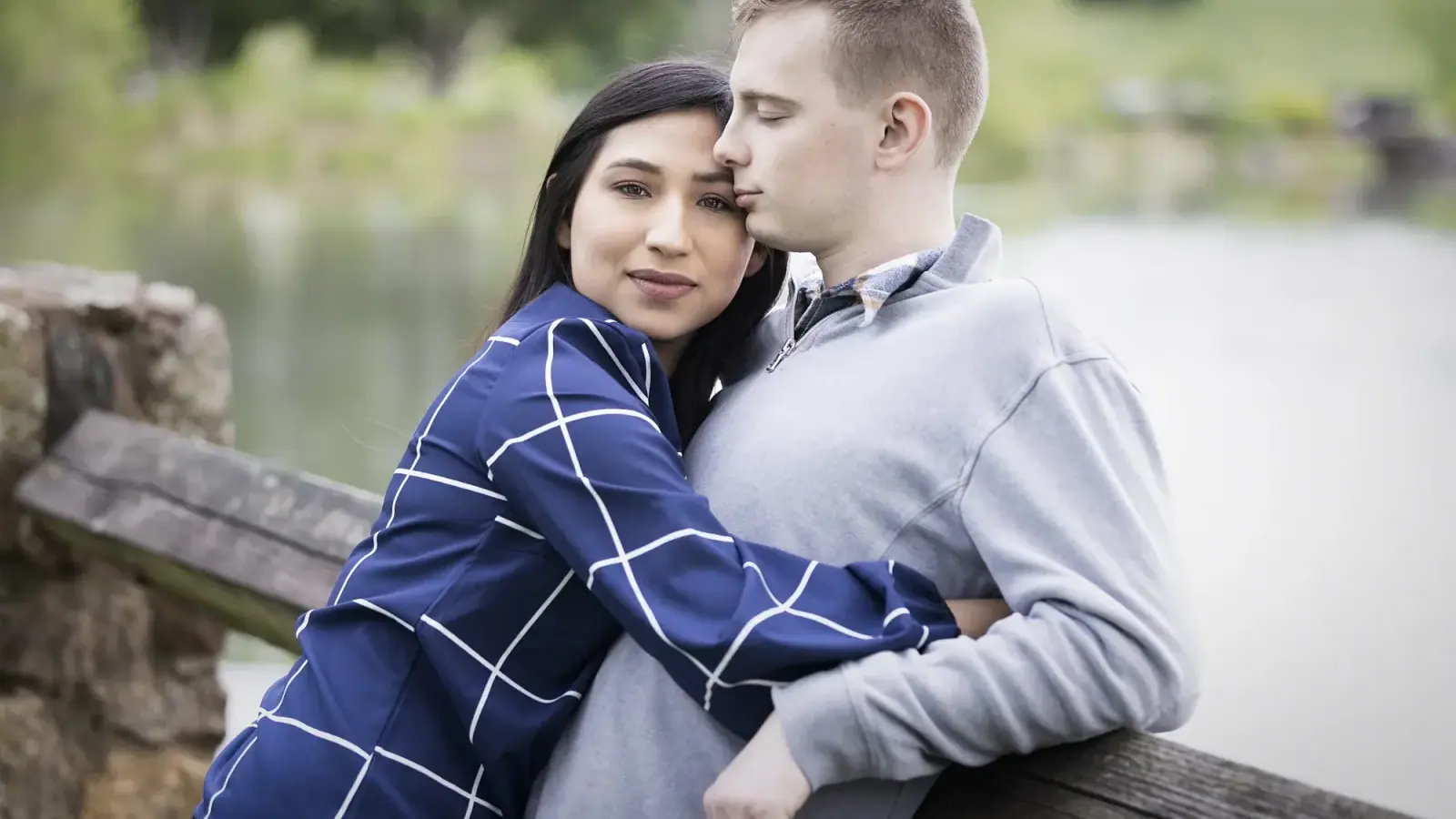
The best family photo poses are not poses at all. They are small jobs you give people: walk toward me, tuck her under your arm, whisper something to your brother. Give everyone something to do with their bodies and their hands, and the stiff line of strangers never shows up.
If you are dreading a row of people staring at the lens, and you are quietly bracing to be the one holding the camera again, I understand. Neither of those is going to happen. Here is how I think about it, and how it works for each size of family.
Why do family photos look stiff?
Because a posed group does the same three things every time. Everyone stands square to the camera, every head sits at the same height, and every arm hangs straight down. That is a police lineup, not a family.
It is also not anybody's fault. When people have no instructions, they freeze and wait. The fix is mechanical, and it starts with a few principles that I use in every session.
Five rules that make any family pose work
Learn these and you can build a pose for any group, any size. I coach all of them live, so you do not have to remember a thing.
1. Stagger the heights
When all the heads line up, the photo flattens into a strip. Sit one person, stand another, crouch a parent next to a small child, and the eye has somewhere to travel. A bench, a step or the arm of a couch does the same job as a stool.
2. Give everyone a touch point
A hand on a shoulder, an arm around a waist, a child on a hip. Contact is what tells the camera these people belong together. Without it, you get several portraits standing near each other.
3. Close the gaps
Daylight between people reads as distance, even when it is only four inches. Ask everyone to move in until it feels slightly too close. It almost never looks too close on camera.
4. Give the hands a job
Hands hanging at the sides are the first thing people notice in their own photos. Put them on someone, in a pocket, around a child, or holding hands. Anything beats dangling.
5. Angle bodies toward each other
Square shoulders make a flat wall. Turn everyone slightly toward the center of the group, or toward the youngest child, and the whole frame leans inward. Faces can still look at the camera while the bodies point at each other.
Family photo poses for 3
A group of three is the easiest to make look natural, and the hardest to make look balanced. Two parents and a child naturally form a triangle, so lean into it.
- The lift-and-lean. One parent holds the child, the other stands close behind or beside with an arm around both. The child's face becomes the high point of the triangle, so the eye lands on it first.
- Sandwich. The child stands between the parents, and both parents lean in toward their head. It works for kids from about age four and up, and leaning toward the middle fixes the straight-line problem on its own.
- Seated together. All three on a couch or a blanket, child across a lap. Sitting is easy on everyone, and lowering the adults brings the whole group to a similar eye level.
Family photo poses for 4
A family of four has a symmetry trap. Two parents and two kids tend to stand in a neat row of four, evenly spaced, which is the stiffest arrangement there is.
- Two and two. Each parent holds or hugs one child. Offset them, so one pair sits slightly forward and one slightly back, and the frame gets depth.
- The pile. Everyone sits close on the floor or a rug, with kids leaning back into parents. It puts all four faces at different heights without anyone being told to stagger.
- Parents on the outside, kids in the center. Both parents lean in over the children, with a hand on each child's shoulder. The kids become the focus, and the adults frame them.
- Walking in a row. More on that below, because walking solves a lot.
Family photo poses for 5 or more
Large groups fail in one predictable way. Everyone ends up in a single flat row, and the faces at the back disappear behind the heads in front.
The solution is layers. Seat the grandparents or the youngest children in front, stand the tallest people at the back, and fill the middle with people at in-between heights. Then check that you can see every face. If you can only see an ear, move that person.
Mix sitting and standing, and group by relationship rather than by height. Parents with their own children can form a small cluster inside the big one, which makes the whole frame easier to read.
For a big group, I also shoot a looser frame, then step in for a tighter one. You get the everyone-is-here photo for the wall and a closer version where individual faces are clear.
Family photo poses with a baby or toddler
I have three sons, so I know what it is to ask a toddler to look at a camera. They will not. That is why I do not ask.
With little ones, I usually take a more photojournalistic approach, watching the interactions rather than demanding a pose. Put the baby in someone's arms, let the toddler move, and photograph the adults looking at the child, not at me. Those frames are almost always the favorites.
Get the adults down to the child's level instead of lifting the child up to yours. Sitting on the floor or kneeling puts everyone close together, and a restless toddler stays within reach.
Family photo poses with teenagers
Teens are not hiding from the camera because they dislike you. They are managing self-consciousness, and they relax when they have something to do.
A wide stance with no clear job is the worst thing you can ask of a teenager. Give them a pocket, a lean on a wall, a shoulder bump with a sibling, or a walking prompt. A teenager who is mildly teasing a brother looks like themselves. A teenager told to smile looks like a hostage.
Let them stand slightly behind or beside a parent instead of tucked into the middle. They still read as part of the family, and they feel less on display.
Poses with grandparents or three generations
Grandparents are often the reason the session is happening, which puts them under extra pressure. Seat them. Sitting is comfortable, it is easier on knees and backs, and it gives the rest of the family a natural place to gather around them.
Put the grandparents in the center and layer the generations around them: kids sitting or leaning in front, parents standing behind. Then take a few smaller combinations, grandparents with grandchildren, grandparents with their own children. Those are the ones people often want printed.
Standing, sitting or walking: which is better?
Use all three. Each one does a different job, and a short session should include each.
- Standing is the classic, and the best one for a large group. Stagger the heights and angle the bodies, and it holds up on a wall.
- Sitting is the most comfortable, and the easiest way to bring a mixed-height group onto one level. Couches, blankets and steps all work.
- Walking is the one I reach for when people feel awkward. Ask the family to walk toward me slowly, holding hands or arms around each other, and talk to each other. Nobody can stand stiff while they are walking, and the talking brings out real expressions.
Ask for a slow walk, not a fast one. A strolling pace keeps faces steady and hair out of the way.
Prompts that get real expressions
This is the part I would hand to any parent who is photographing their own family. Skip "say cheese," and give a task or a question.
- "Whisper something silly to the person next to you." The giggle that follows is the shot, not the whisper.
- "Squeeze the littlest one on three." Everyone leans in at once, which closes the gaps without a word about gaps.
- "Walk toward me and don't look at the camera." Eyes down at the children or each other. It gives me a candid frame, and you get a break from the lens.
- "Tell me about the last funny thing that happened at dinner." Talking pulls the eyes into the smile. A held smile fades after a few seconds, a real one comes back each time.
- "Dad, pick her up and spin once, slowly." The reaction is the point. Lift children under the arms, never by the hands or wrists. MedlinePlus lists lifting a child up by one arm and swinging a young child by the arms among the causes of nursemaid's elbow, an injury common in children under five. A spin from a hug is safer and photographs just as well.
- "Everybody close your eyes, take a breath, and open them on three." It resets a group that has been smiling too long.
If your family tends to bicker under pressure, that is fine. A little eye-rolling at each other, with an arm still around someone, often makes the best frame of the session.
You do not have to know any of this
I direct every pose, and I coach the posing and the expressions throughout the session. You will never be left standing there wondering what to do with your hands.
A family and couples session starts from $690 and includes a wardrobe consultation for the whole family, studio, location or a combination, and an in-person reveal after the shoot. Inquire about a family session and tell me who is in your family.
What if the dad hates photos?
He is probably not the only one, he is just the one who admits it. Most men who say they hate photos mean they hate standing around being looked at.
Give him a job. Holding a child, carrying one on his shoulders, or walking with a hand on someone gives him a reason to be there. Keep him out of the "stand here and smile" slot, and he usually forgets about the camera before long.
I am not going to ask anyone to fake a smile. If the session is just not going right, I will tell you, and it can be rescheduled at no charge.
How to get yourself in the picture
If you are the person who always takes the photos, check your camera roll. Most of us find the same thing: hundreds of pictures of everyone else, and almost none that include us.
Two practical fixes. First, say it out loud before the shoot: "I want to be in this." It is easier to plan for than to fix later. Second, if a photographer is there, you can step in for the central frames without worrying about anything. That is part of why people hire one.
If you are taking family photos yourself, use a tripod or a steady surface and the camera's timer, and shoot a run of frames. Adults blink 10 to 20 times a minute, so with a whole family in frame someone is mid-blink more often than you would guess. A burst is how you get one where every eye is open.
What to wear and where to shoot
Posing gets easier when the clothes are not fighting you. My wardrobe rule is coordinated, not matchy, and I send a detailed wardrobe guide with example palettes. For the details, read my guide on what to wear for family photos, or the holiday version, Christmas family photo outfits.
For location, I have a separate post on the best places for family photos in Charlottesville. If you want ideas for a holiday setting, Christmas family photo ideas covers scenes and settings.
Posing a single person instead of a group? My headshot poses guide covers that.
Frequently asked questions
What are some creative family photo poses? Think prompts rather than poses. Walking toward the camera holding hands, a pile of everyone on a rug, whispering a joke to a neighbor, or a hug with a child in the middle all produce natural expressions. The creative part is the interaction, not the position.
What are good family photo poses for 3? Try a triangle. One parent holds the child while the other stands close with an arm around both, or sit all three together with the child across a lap. A child between two parents, both leaning in, also works.
How do you pose a large family? Build layers. Seat the grandparents or youngest children in front, stand the tallest people behind, and make sure every face is visible. Group parents with their own children and shoot a looser frame, then a tighter one.
How do you pose a family of 4? Avoid a straight row of four. Offset two pairs, one slightly forward, or sit everyone close on a rug with the children leaning back into their parents. Different head heights are what make it work.
How do you get kids to cooperate in family photos? Do not ask them to pose. Give them something to do, like walking, a hug on three, or a whisper. I have three sons, and with children I take a more photojournalistic approach and focus on interactions rather than strictly posed portraits.
How long should a family photo session be? It depends on the size of your family. A larger group or very small children need more time. A shorter mini session is an option for a quick family update in my studio.
Ready when you are
Nobody has to feel photogenic before they book. Leave the posing to me, and bring the family. Inquire about a family session and we will plan it from there.
Last updated: October 26, 2026
About the author: Arnel Gonce is a portrait photographer in Charlottesville, Virginia. She has photographed over 1,000 sessions since 2015, covering headshots and personal branding, families, seniors, maternity, boudoir and her signature Fabulous Over 50 sessions. She guides every client from first nerves to final gallery so the camera catches them at their most confident.

Portrait Photographer, Charlottesville VA
Arnel Gonce is a portrait photographer in Charlottesville, Virginia. She photographs headshots, families, seniors, maternity, boudoir, and her signature Fabulous Over 50 sessions, guiding every client from first nerves to final gallery so the camera catches them at their most confident.
Reading is nice. Being in front of the camera is better.
Ready to Book Your Session?
Tell me what you have in mind and we will plan a session that feels easy, fun, and completely like you.